
The Types of Chemglass Jacketed Reactors from China manufacturer
Release Time:
2023-04-20
Pageviews:

Chemglass Jacketed Reactors from China manufacturer are the backbone of the chemical industry. They come in various sizes, shapes, and forms, and can carry out different chemical reactions. Let's take a look at some of the different kinds of Chemglass Jacketed Reactors from China manufacturer:
1. Single Jacketed Reactors: Single jacketed reactors are the basic models of Chemglass Jacketed Reactors from China manufacturer. They consist of a glass vessel and an outer jacket that can be filled with a circulating fluid. They are used for various applications like distillation or extraction.
2. Double Jacketed Reactors: Double jacketed reactors are similar to single jacketed reactors, except they have a second jacket around them. This helps in controlling the temperature more efficiently and uniformly.
3. Triple Jacketed Reactors: Triple jacketed reactors are similar to double jacketed reactors, but with an additional third jacket. This third jacket is often used for the circulation of coolant or might be a vacuum jacket for insulation against ambient temperature fluctuations.
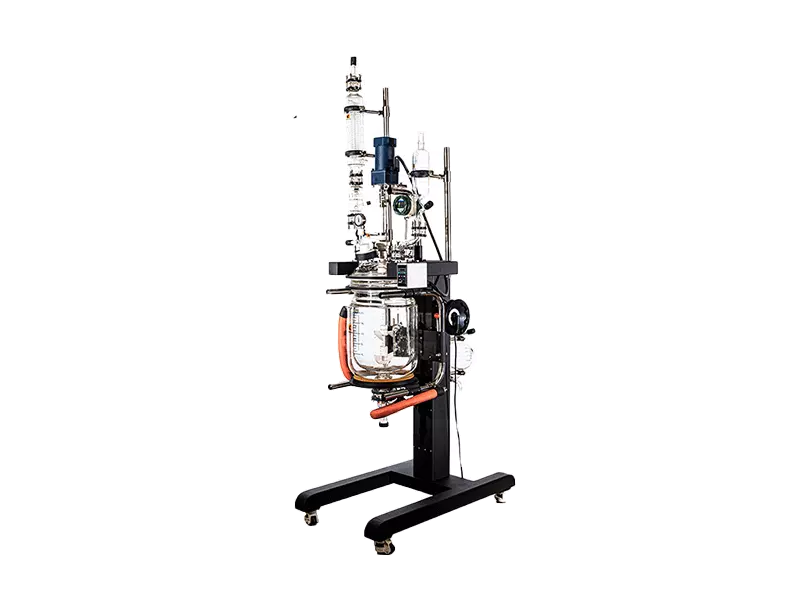
4. Filter Reactors: Filter reactors are designed for intermediates, production steps, and final product filtration. They have a bottom filter with a Duttweiler type design, which allows efficient and easy separation between the solids and liquids.
5. Glass Reactors for Solid/Liquid Reactions: Glass reactors for solid/liquid reactions allow researchers to carry out chemical reactions on solid samples with solvents or other liquids. They can also withstand high temperatures and are resistant to harsh chemicals.
In conclusion, the Chemglass Jacketed Reactors from China manufacturer are a vital tool in the chemical industry. With a range of designs and models, they can cater to various applications and help in achieving precise control over reaction parameters. With the right selection of Chemglass jacketed reactors from China manufacturer, the laboratory process can be further optimized for higher efficiency, accuracy and safety.
Latest News
2024-09-03
Abstract: Oil deacidification is an important step in food processing, which aims to remove free fatty acids in oil and improve its quality and stability. Traditional deacidification methods have some limitations, such as low efficiency, high energy consumption, and loss of nutrients. In recent years, molecular distillation technology has gradually attracted attention as a new deacidification method. This article will introduce the application of molecular distillation in oil deacidification, including the principle, operation process and advantages, and focus on the outstanding advantages of Aishengke in molecular distillation technology.
Vitamins are products that are closely related to people's lives, and have become one of the main bulk products in the international pharmaceutical and health care products market. The amount of vitamin E is the largest, followed by vitamin A, vitamin C, vitamin D and so on. With the growth of economy and the improvement of people's living standards, the demand for vitamin products will further increase, and people's requirements for their quality and grade will also further increase. Therefore, as an important separation technology in the production of many vitamins, molecular Distillation technology will also play an increasingly important role in the vitamin industry.
Glyceryl monostearate (GMS), abbreviated as monoglyceride, is produced from natural vegetable oils and fats. The active ingredient is purified by molecular distillation technology to more than 90%, also known as molecular distillation monoglyceride. It is the most widely used food Additives, safe to use in the production and processing of food, medicine, plastics, etc., account for more than half of the emulsifier consumption in the market.
The principle of molecular distillation is to make use of the different degrees of affinity between different molecules. By controlling the conditions such as temperature and pressure, the mixture begins to vaporize. Different components in the vapor form liquids in the condenser and are separated according to their boiling points. This distillation method not only has a good separation effect, but also can be repeatedly separated and purified, and is widely used in chemical, pharmaceutical and other fields.
Molecular distillation is a common chemical method used to separate and purify compounds. In the pharmaceutical industry, molecular distillation is widely used in pharmaceutical purification. This article will focus on the application of molecular distillation in pharmaceutical purification and provide some specific examples.
Laboratory vacuum distillation equipment has undergone significant advancements in recent years, driven by the need for higher efficiency, improved safety, and enhanced user experience.
Global recruitment of distributors
If you recognize the brand, technology, products and market prospects of Aishengke, we look forward to establishing a strategic partnership with you for win-win cooperation and development. Looking forward to your joining!
Contact Us
Manager Han: +86 198 5022 2118
Landline: +86 0519-85611172
Fax: +86 0519-85611132
Address: No. 109 Liuyanghe Road, Xinbei District, Changzhou City